

Christ, Family, Church, and the Foundation of a Covenant Life
I have been fascinated by the work being done on the Salt Lake Temple.
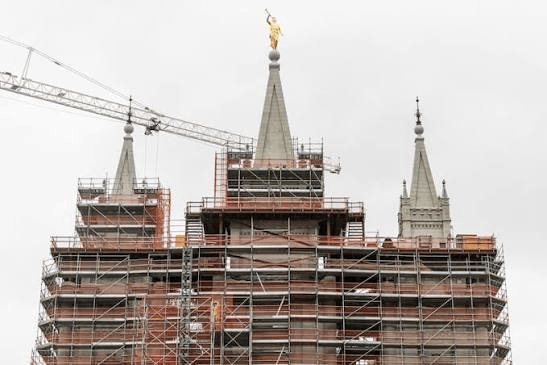
For years we have watched scaffolding go up, walls come down, enormous holes appear around the temple, and heavy equipment move into a place that most of us have always thought of as permanent. The temple has stood there since 1893. Its granite walls are massive. From the outside, it certainly looked strong. But engineers knew that if they wanted this beloved building to withstand a major earthquake, they needed to look at something most people would never see.
The foundation.
And the more I have thought about that, the more I have thought about families, testimony, and the way we sometimes think about Church.
I wonder if, at times, we have expected Church to do a job that was never meant to belong primarily to Church. I wonder if we have confused the support around the foundation with the foundation itself.
Because the foundation is Jesus Christ.
And I believe the most important place that foundation is laid is in the home.
You Have to Dig Down Before You Can Build Up
The renovation of the Salt Lake Temple has been extraordinary because so much of the work has happened underground. Crews excavated around and beneath the temple. Engineers examined the original pioneer-era foundation. They found spaces and voids between stones and injected high-strength grout into them. Steel and reinforced concrete were added. Shoring systems held the surrounding earth in place while workers dug approximately 17 feet below portions of the existing foundation.
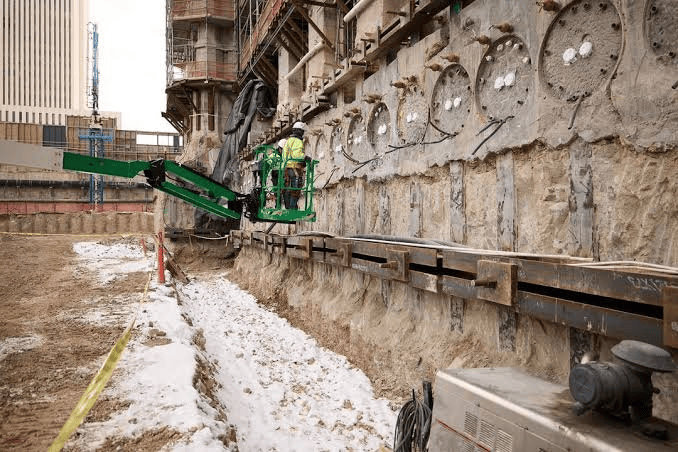
Eventually, the temple was placed on a sophisticated base-isolation system designed to allow the earth beneath it to move during an earthquake without transferring all of that destructive movement into the building above.
Think about that.
They didn’t begin with the spires.
They didn’t begin with the windows.
They didn’t begin with what everyone could see.
They dug down.
There is something about that that feels very familiar to me as a mother, grandmother, teacher, and someone who has spent a lifetime watching people grow. The things we see on the outside are not necessarily what will hold us when life gets hard.
A child can know all the Primary answers.
A teenager can attend every youth activity.
A family can sit together on a pew every Sunday.
We can know the songs, use the right vocabulary, attend the activities, fulfill callings, and look very much like a strong spiritual structure.
But the real question is: What is underneath all of it? When the ground begins to shake, what are we actually standing on?
Jesus Christ Is the Foundation
Helaman taught:
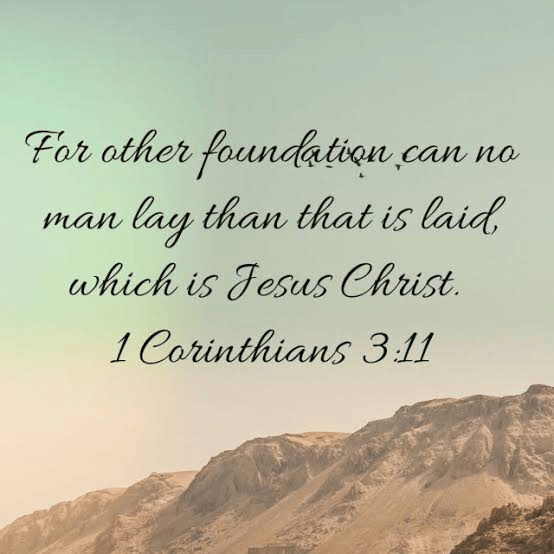
“It is upon the rock of our Redeemer, who is Christ, the Son of God, that ye must build your foundation.”
I love that scripture because it doesn’t say to build our foundation on Church attendance. It doesn’t say to build it on a wonderful bishop. It doesn’t say to build it on a favorite Primary teacher, youth leader, seminary teacher, program, activity, tradition, or even on our parents’ testimonies. Those can all be powerful influences for good. But the Rock is Jesus Christ.
The purpose of everything else is to help us come to Him. That distinction matters to me more and more. I don’t want my children and grandchildren simply to know how to do Church.
I want them to know Jesus Christ.
I want them to know where to turn when they are frightened. I want them to understand repentance not merely as a step in a lesson, but as the miraculous opportunity Christ gives us to change, to grow. I want them to pray because they have learned that Heavenly Father hears them. I want them to recognize the whisperings of the Spirit. I want them to know how to search the scriptures when they need answers. I want them to understand why they make covenants and Who those covenants bind them to. And I want them to know that when everything around them feels uncertain, Jesus Christ is still there.
That kind of testimony cannot be built in one hour on Sunday. It is built over a lifetime. And much of its earliest construction happens at home.
Home Is the Construction Site
Family spiritual learning isn’t always going to look impressive. Sometimes it is a wonderful scripture discussion. Sometimes it is a three-minute conversation in the car. Sometimes it happens while washing dishes. Sometimes it is a child asking a question at bedtime when you are already exhausted. Sometimes it is a teenager asking something you don’t know how to answer. Sometimes it is a parent saying, “I don’t know. Let’s find out together.” Sometimes it is letting our children see us pray when we are worried. Sometimes it is letting them see us repent. Sometimes it is apologizing when we were wrong. Sometimes it is forgiving when forgiveness is difficult. Sometimes it is pointing out God’s goodness while walking through the garden or looking at a sunset. Sometimes it is simply saying, naturally and sincerely, “I know that Jesus Christ has helped me.”
Those little moments may not feel monumental. But neither does every shovel of dirt removed from a foundation. Little by little, we dig deeper. Little by little, we straighten what isn’t square. Little by little, we fill the gaps. Little by little, we build on the Rock.
Making the Foundation Square
One thing I appreciate about construction is that a builder doesn’t just ask whether something looks approximately right. It has to be measured. It has to be level. It has to be plumb. It has to be square. Because a small error at the foundation becomes a much bigger problem as the structure rises.
Spiritually, I think we need a square too. For me, that square is Jesus Christ.
I can ask: Does what I am teaching my family point them toward Christ? Does the way I correct them teach them about Him? Does the way I talk about repentance sound like Him? Does the way I treat someone who is struggling reflect Him? Does our Sabbath worship bring us closer to Him? Are our family traditions helping us remember Him—or are we simply maintaining traditions because we have always done them? Are we teaching our children to seek personal revelation and develop their own relationship with the Savior?
I have found that I have made so many mistakes in our family, and although my kids are grown and creating their own families, I still need to pay attention to these questions. We continually bring our lives back to the square and check the measurement… even when they “have grown a foot or two.”
Christ is the standard.
Then There Is the Backfill
This is the part of the Salt Lake Temple project that has given me a new way of thinking about Church.
When a foundation is being built or strengthened, the area around it matters. The soil has to be prepared. Excavation has to be supported. Voids have to be filled. Water has to be managed. Materials around the foundation need to be placed and compacted appropriately.
During the Salt Lake Temple renovation, engineers used extensive shoring, grouting, reinforcement, concrete, and carefully engineered support systems while exposing and strengthening the old foundation and connecting it to the new seismic system.
The surrounding preparation matters because it helps create the conditions in which the foundation and structure can function as they were designed to function.
And suddenly I thought:
That is a beautiful way to think about Church.
Church can be wonderful backfill. It surrounds. It reinforces. It supports. It fills spaces. It creates conditions where spiritual strength can grow. A loving Primary teacher may reinforce something a mother has taught at home. A youth leader may say exactly what a teenager needs to hear at a moment when a parent can’t seem to reach them. A bishop may help someone discover the hope and healing of repentance. A Sunday School teacher may open a scripture in a way someone has never considered. A Relief Society sister may put her arms around a woman whose world has just fallen apart. A quorum may show a young man what brotherhood and service look like. A ward family can gather around someone when the ground beneath them is shaking.
That support matters.
I love Church.
I believe we need Church.
I believe gathering matters.
I believe ordinances matter.
I believe teachers, leaders, prophets, temples, service, fellowship, priesthood power and worship together matter tremendously.
But I also believe we need to be very careful not to ask Church to become something it was never intended to be.
Church should support family spiritual learning. It should never replace it.
And neither Church nor family is the ultimate foundation.
Jesus Christ is.
Church Cannot Carry the Entire Load
A Primary teacher gets our child for a relatively short period each week. A youth leader has only so many hours with our teenagers. A bishop cannot personally build every member’s relationship with Christ. A seminary teacher cannot create a student’s testimony for them.
We cannot outsource discipleship. We cannot say, in effect, “I got them to Church. Now you build their testimony.”
Church can reinforce what we are building. Church can add strength. Church can provide experiences we cannot provide alone. Church can surround our children with additional witnesses of Jesus Christ. But the daily, ordinary work of learning to follow the Savior belongs largely in the home and in the heart of each individual.
That means we talk about Christ at home.
We study Him at home.
We ask questions at home.
We pray at home.
We repent at home.
We forgive at home.
We serve at home.
We talk about spiritual experiences at home.
We make our homes places where questions are safe and where seeking answers is encouraged.
And then we go to Church and allow the body of Christ to strengthen, reinforce, and add to what is already being built.
Church and home shouldn’t be competitors. They are partners. But they don’t have identical jobs.
What Happens When the Backfill Shifts?
This distinction becomes especially important when our children grow up. Trust me. Hip high in it.
What happens when they move away and their new ward isn’t like the ward they grew up in?
What happens when a beloved bishop is released?
What happens when a favorite leader disappoints them?
What happens when they don’t feel socially comfortable at Church?
What happens when a program changes?
What happens when someone says something insensitive?
What happens when they have questions that don’t have quick answers?
What happens when another member of the Church makes a serious mistake?
If their testimony was built primarily on the backfill, the whole structure may begin to feel unstable. But if the foundation is Jesus Christ, we can acknowledge that something around the foundation has shifted without believing that the Foundation Himself has moved.
That is an important distinction.
People can disappoint us. Programs can change. Church culture can be imperfect. Leaders are human. Our own understanding can change. Questions can come.
Jesus Christ remains the Rock.
We Are Not Trying to Prevent Earthquakes
Perhaps my favorite lesson from the Salt Lake Temple renovation is this:
The engineers did not prepare the temple by assuming an earthquake would never happen. They prepared it because earthquakes will happen.
The remarkable base isolators beneath the temple are designed to allow movement. In a major seismic event, the earth can move several feet while the system helps protect the structure above.
What a picture of faith.
Sometimes I think we try to spiritually “earthquake-proof” our children by preventing them from encountering anything that might shake them. But we can’t. Life will shake them. Loss will shake them. Questions may shake them. Unanswered prayers may shake them. Relationships will sometimes shake them. The behavior of other people—even people at Church—may shake them. Their own mistakes may shake them. There may even be seasons when they aren’t sure what they believe. Our job isn’t to create a life in which the earth never moves.
Our job is to help them build deeply enough on Jesus Christ that when it does, they know where to turn.
Covenants Tie the Structure to the Foundation
This is where covenant becomes so beautiful to me. A covenant life isn’t simply a checklist of things we promise to do. Covenants bind us to Christ. They connect our lives to Him.
Baptism says: I belong to Him.
The sacrament reminds me: I still belong to Him.
Temple covenants deepen that relationship: My life is His.
So when the earthquake comes, I don’t have to rely solely on how strong I feel. I am connected to Someone stronger than I am. When I fail, I can repent. When I am confused, I can seek. When I am afraid, I can pray. When I wander, I can return. When I don’t understand everything, I can still choose to remain connected to Christ while I continue learning.
That, to me, is the foundation of a covenant life.
Maybe We Need to Look Underground
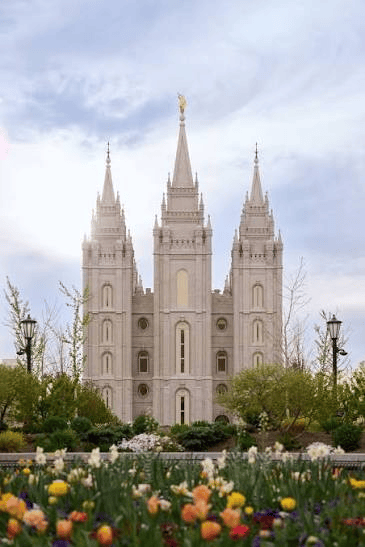
The Salt Lake Temple renovation has required years of work that most people will never see once the project is finished. Eventually the construction equipment will disappear. The holes will be filled. Landscaping will return. People will see the beautiful granite temple and its familiar spires. But underneath it will be an extraordinary foundation that most visitors will never see.
And perhaps that is true of the most important work we do in families. Nobody sees every bedtime prayer. Nobody sees every conversation. Nobody sees every tear. Nobody sees every time a mother or father wonders, Am I doing this right? Nobody sees every grandmother quietly praying for a grandchild. Nobody sees all the questions, apologies, scripture discussions, acts of forgiveness, whispered prayers and little moments when someone chooses Christ. But those things matter.
We are building underground.
We are preparing for earthquakes we may never see. And Church can beautifully surround that work. It can support it. Reinforce it. Strengthen it. Add witnesses to it. Provide ordinances and covenant opportunities. Give us a community in which we serve and are served. Help fill gaps. Help us realign when we get a little out of square.
But Church should never take the place of spiritual learning in the family. And it should never be confused with the Foundation. The Church isn’t the Rock. The family isn’t the Rock. A beloved leader isn’t the Rock. A program isn’t the Rock. A tradition isn’t the Rock.
Jesus Christ is the Rock.
Our families help build upon Him. Our covenants bind us to Him. The Church surrounds and supports us as we build.
And when the ground begins to shake—and at some point it will—I hope the people I love know exactly what is underneath them. Not simply a lifetime of Church attendance. Not simply the testimony of their parents or grandparents. But their own deeply rooted, carefully built, covenant relationship with Jesus Christ.
Because ultimately, that is what will hold.


